Pournami
Pournami is a sacred observance dedicated to worshiping the full moon.
Talk to Astrologer Order Report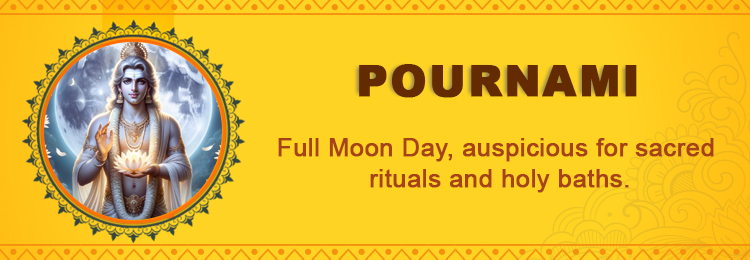
Upcoming Dates
Pournami
Pournami is a sacred observance dedicated to worshiping the full moon, which is the brightest and most beautiful phase of the lunar cycle. Pournami means "fullness" or "completion," and it occurs on the 15th lunar day (Purnima) of every fortnight, both during the waxing and waning phases of the moon. Pournami is considered a very auspicious time to seek the blessings of the moon god (Chandra), one of the nine planets (navagrahas) in Hindu astrology.
Significance of Pournami
Pournami is derived from the Sanskrit word "purna," which means "full" or "whole." It is believed that during this time, the moon reflects the full glory and light of the sun, which is the universe's source of life and energy. The moon also represents a person's mind, emotions, intuition, creativity, and fertility.
Pournami is also associated with many festivals and rituals in Hinduism, such as Guru Purnima, Buddha Purnima, Kartik Purnima, Sharad Purnima, Holi, Raksha Bandhan, etc. These festivals celebrate various aspects of life, such as wisdom, enlightenment, devotion, love, prosperity, and joy.
Pournami is also considered a favorable time to perform various spiritual practices, such as meditation, yoga, chanting, fasting, charity, and pilgrimage. These practices help to enhance the positive qualities and reduce the negative influences of the moon in one's life.
Legends of Pournami
There are many legends and stories about pournami in Hindu scriptures and mythology. Some of them are:
- According to the Ramayana, Lord Rama was born on a pournami day in Chaitra (March-April). He is also known as Chandra Putra, meaning "the son of the moon." Lord Rama is regarded as the ideal human being, the embodiment of dharma (righteousness), virtue, and compassion. Worshipping Lord Rama on Pournami Day helps to attain peace, happiness, and success in life.
- According to the Mahabharata, Lord Krishna performed the rasa lila, a divine dance of love and bliss, with his consort Radha and the gopis (cowherd girls) on a pournami night in the month of Kartik (October-November). This night is also known as Sharad Purnima, meaning "the full moon of autumn." Lord Krishna is Godhead's supreme personality and the source of all creation. Worshipping Lord Krishna on Pournami Day helps to attain devotion, joy, and liberation.
- According to the Puranas, Lord Vishnu incarnated as Kurma, a giant tortoise, on a pournami day in the month of Vaishakha (April-May). He supported the Mandara mountain on his back as a churning rod for the gods and demons to churn the milky ocean and obtain the nectar of immortality. This day is also known as Kurma Jayanti, meaning "the birthday of Kurma." Lord Vishnu is the preserver, protector of the universe, and sustainer of life. Worshipping Lord Vishnu on pournami day helps to attain stability, prosperity, and protection.
Important Festivals Associated with Pournami
Many festivals are celebrated on pournami days throughout the year. Some of them are:
- Guru Purnima: This festival honors the guru (teacher or spiritual master) who guides and enlightens the disciples. It falls on the 15th lunar day (Purnima) of the bright fortnight (shukla paksha) in the month of Ashadha (June-July). It marks the anniversary of the birth of Sage Vyasa, who compiled the Vedas, the Upanishads, the Puranas, and the Mahabharata. Devotees express gratitude and reverence to their guru by offering prayers, gifts, and service.
- Buddha Purnima: This festival commemorates the birth, enlightenment, and death of Gautama Buddha, the founder of Buddhism. It falls on the 15th lunar day (Purnima) of the bright fortnight (shukla paksha) in the month of Vaishakha (April-May). It is also known as Vesak or Buddha Jayanti. Buddhists celebrate this day by meditating, chanting, performing rituals, donating to charity, and spreading peace and compassion.
- Kartik Purnima: This festival celebrates various aspects of Hindu culture and spirituality. It falls on the 15th lunar day (Purnima) of the bright fortnight (shukla paksha) in the month of Kartik (October-November). It is also known as Deva Diwali or Tripuri Purnima. Hindus celebrate this day by worshipping Lord Shiva, Lord Vishnu, Lord Kartikeya, Goddess Lakshmi, Goddess Ganga, and other deities. They also perform rituals such as bathing in holy rivers, lighting lamps, offering prayers, and observing fasts.
Benefits of Observing Pournami
Observing pournami benefits a devotee's physical, mental, and spiritual well-being. Some of the benefits are:
- Balances the energies of the sun and the moon in a person's body and mind. It also helps to harmonize a person's personality's masculine and feminine aspects.
- Enhances a person's intuition, creativity, and fertility. It also helps to improve a person's memory, concentration, and learning abilities.
- Helps to attract the grace and blessings of the moon god (Chandra), who can fulfill all the desires and wishes of a person. It also helps to overcome the adverse effects of the moon in one's horoscope.
- Helps to perform various spiritual practices, such as meditation, yoga, chanting, fasting, charity, and pilgrimage. These practices help to elevate the consciousness and awareness of a person.
Astrological Significance of Pournami
According to Hindu astrology, the moon is one of the nine planets (navagrahas) that influence the karma and destiny of a person. The moon also represents a person's mind, emotions, intuition, creativity, and fertility.
The moon goes through different phases in its monthly cycle, such as the new moon (Amavasya), full moon (Pournami), and crescent moon (Shukla and Krishna paksha). Each phase has a different effect on the moon's energy and influence on a person's life. The moon also transits through different constellations (nakshatras) and signs (rashis) in its monthly cycle, affecting the moon's energy and influence on a person's life.
Pournami is the full moon day when the moon is fully visible and bright in the sky. It is considered a time of light, wisdom, and positivity. It is also a time of completion, fulfillment, and celebration. Pournami can affect a person's physical and creative state, causing health, vitality, beauty, or fertility. Pournami can also enhance the positive qualities and reduce the negative influences of the moon in a person's life, such as intuition, creativity, and emotion. The astrological significance of Pournami may vary depending on the nakshatra and rashi of the moon on that day, as well as the nakshatra and rashi of a person's birth chart. Therefore, it is advisable to consult an expert astrologer to learn more about the rituals and remedies one should follow to get the maximum benefits of this sacred observance.
Contact Sulekha
If you want to know more about Pournami or any other sacred observance, you can contact Sulekha, the leading online platform that connects you with thousands of verified and trusted astrologers across India. Whether you need horoscope analysis, predictions, remedies, or guidance, Sulekha can help you find the best astrologer. You can search for astrologers on Sulekha using filters such as location, experience, ratings, reviews, and fees.
You can also view the profiles of astrologers, their services, contact details, and availability. You can also book an appointment with an astrologer online through Sulekha and get a personalized consultation. Visit us today and find the best astrologer for your needs.